Chasing the Silverrudder: One Sailor’s Solo Voyage around Fyn#
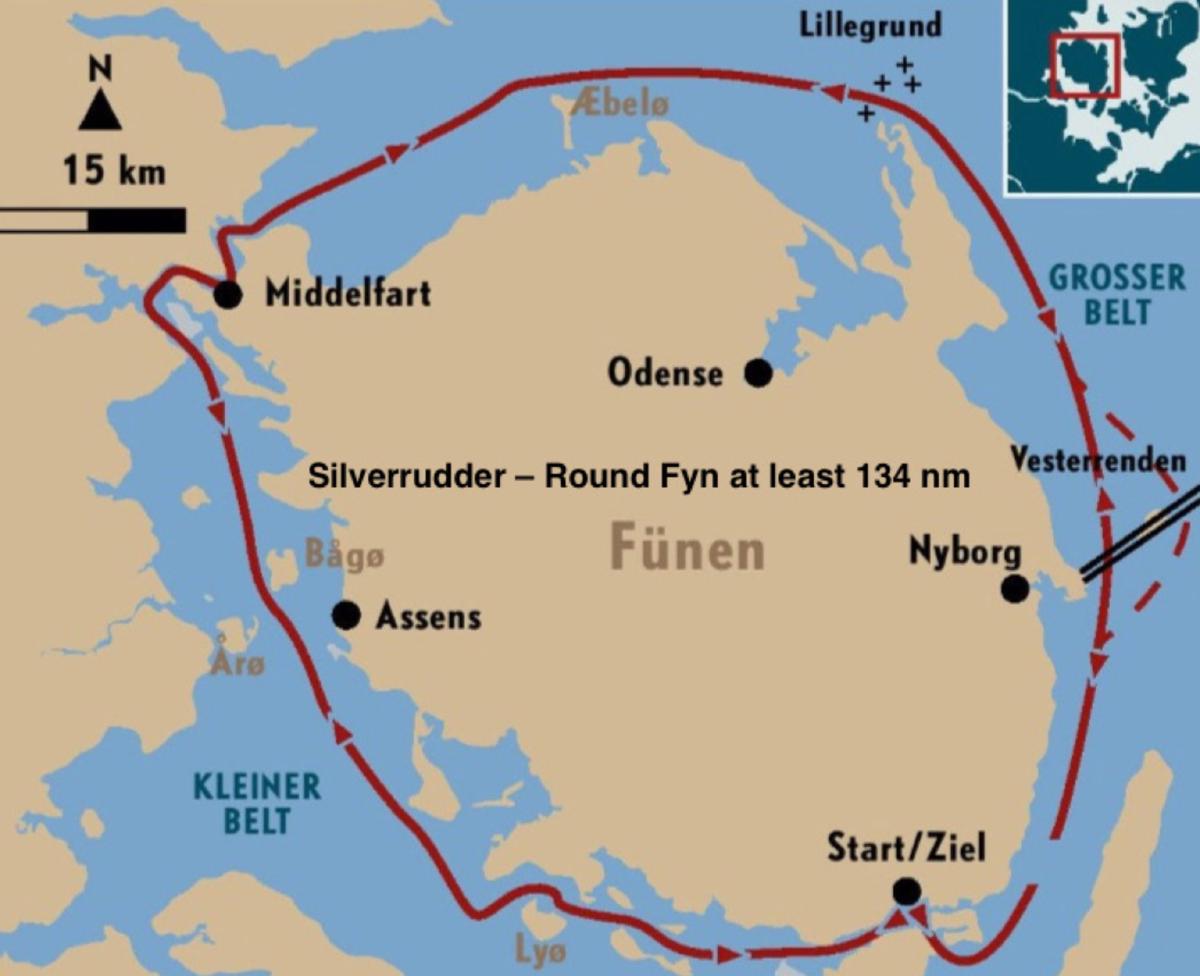
By the time September 2025 arrived, I had been dreaming of this moment for years – a single-handed circumnavigation of Fyn in the famous Silverrudder Regatta. It sounded deceptively simple: 134 nautical miles around a Danish island in the Baltic, alone and without a stop. But anyone who sails knows what that really means: at least thirty hours at sea, at the mercy of wind, current, and your own endurance.
I had tried to enter the Silverrudder before, always without success. Each year, four hundred skippers vie for a spot, and within minutes the entry list is full. Yet this March, against all odds, I finally managed to secure a place.
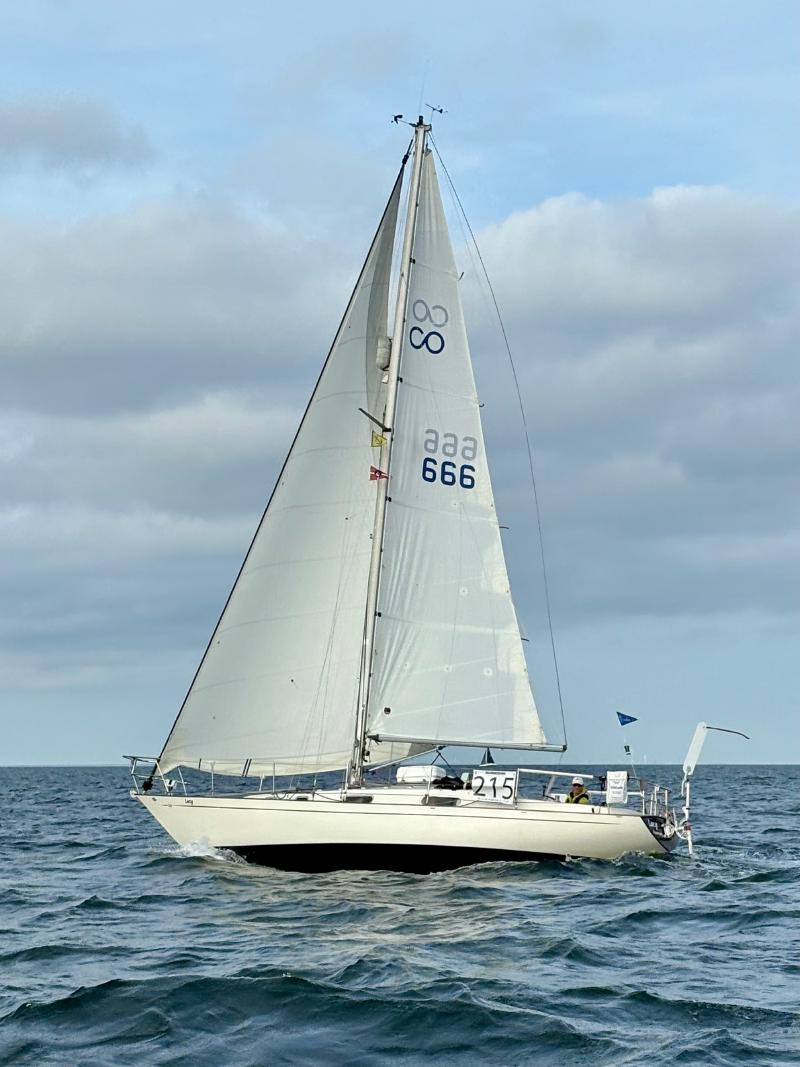
Excitement gave way to doubt soon enough. Could I really do it? Was Lucy, my 1979 Contessa 32, fit for the challenge? My solo run in the smaller “Double Rundt” regatta helped build confidence, and conversations with seasoned Silverrudder veterans proved invaluable. Most importantly, I resolved to set some limits, especially to define in advance how long I would sail non-stop before fatigue or risk crept in.
Two days before the start, I reached Svendborg after a brisk, blustery crossing. It’s a thrill unlike any other—entering a harbour brimming exclusively with sleek racing yachts. Volunteers waved me in with warm smiles, guiding me to my berth. Not all 427 boats had arrived yet, but the docks already hummed with quiet anticipation.
What I love most about this regatta is the spirit of camaraderie. Help is never far away. I even heard of the race committee organising tows for grounded boats on the far side of the island. There’s an honesty and friendliness here that settles the nerves and reminds you: we might be competing, but we’re also in this together.
In my class “Medium” boats between 30 and 35 feet line up. Many are purpose-built racers. Mine isn’t. But the forecast promised 15 to 20 knots, perfect weather for a Contessa 32. I felt quietly hopeful.
At dawn, I positioned Lucy near the back of the fleet. The Svendborg Sound is narrow, its shallows notorious. Still, the start went smoothly. Gusts tore down from the Storebælt, snapping sails and testing patience. I watched one or two boats spin out in broaches while I pressed on steadily, proud of my little ship.
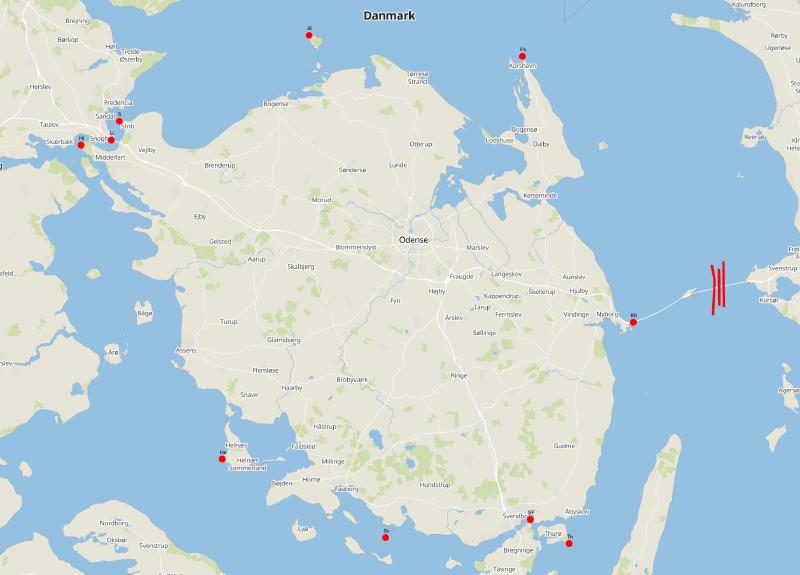
As the Storebælt Bridge loomed: a dark silhouette against late afternoon light. I hesitated to hoist the Code Zero. Something about that concrete giant overhead made me pause. In truth, there was clearance to spare. But at that moment, instinct said no.
By evening, the sun dropped low along Fyn’s northeast coast. I hardened up, sailing close-hauled as darkness crept in. North of the island, near Middelfart, the current grew mischievous. The old Lillebælt Bridge, how infamous it is if motoring is not an option. Two knots of adverse current, barely a breath of wind. It felt as if an unseen hand had seized Lucy by the stern just as I was to cross the bridge. I laughed out loud, half in disbelief, half surrender.
For four long hours, I advanced half a mile, only to drift back again, dodging the bridge piers. Two more hours at anchor, then at last, a sliver of breeze. Gradually, the sails filled; 20 knots of wind and sunshine returned. Lucy came alive again. I trimmed, tacked, and felt joy return with every mile. The first twenty-four hours had passed.
South of Fyn, the wind turned spiteful—gusty, twisting, laced with rain. The course beckoned for a spinnaker, but I resisted because of the gusting wind and the light beginning to fade. The narrow channel swarmed with other yachts, ghosts flitting through shifting veils of drizzle. It was strangely serene, almost eerie.
Finally, the familiar waters of Svendborg Sound came into view. The tide ran hard against me, two knots strong. My arms ached, and the thought of another bridge with head current and exhaustion closing in solidified my decision. I had reached my time limit. I struck the sails and motored the last miles home.
Mooring up again, fatigue washed over me—alongside a quiet, satisfied pride. I hadn’t crossed the finish line, but I had sailed far, learned more than expected, and discovered a deeper respect for both sea and self. The race had ended – the adventure continues.
Route#
Comparison Comfortina 32 vs Contessa 32#
Timings#
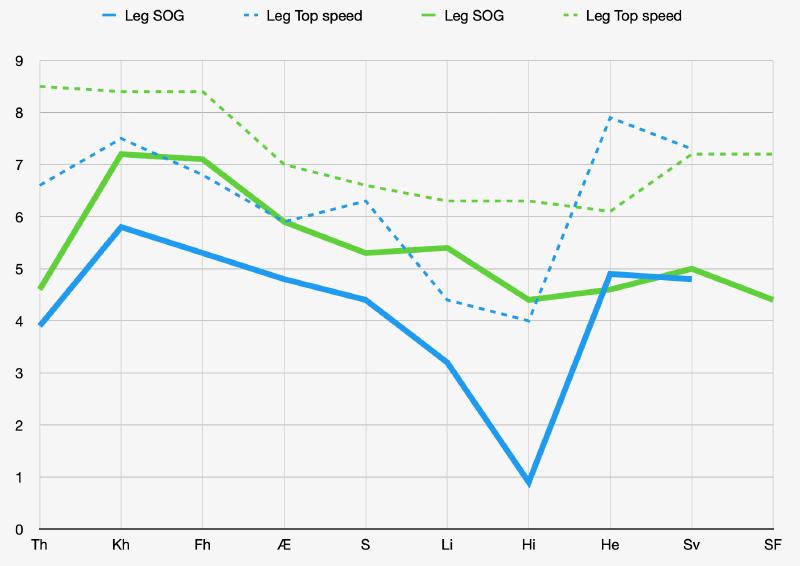
Lucy Contessa 32#
| Ort | Time | Leg time | Leg SOG | Leg Top speed | Distance |
|---|---|---|---|---|---|
| Thurø | 11:53:30 | 1h 8m 36s | 3,9 | 6,6 | 4,1 |
| Knudshøved | 15:16:18 | 3h 7m 42s | 5,8 | 7,5 | 18 |
| Fynshøved | 19:22:22 | 4h 6m 3s | 5,3 | 6,8 | 21,9 |
| Æbelø | 22:41:00 | 3h 18m 37s | 4,8 | 5,9 | 16,0 |
| Strib | 02:43:51 | 4h 2m 50s | 4,4 | 6,3 | 17,7 |
| Ny Lillebæltsbro | 03:44:36 | 1h 0m 45s | 3,2 | 4,4 | 3,3 |
| Hindsgavl | 10:40:42 | 6h 56m 5s | 0,9 | 4,0 | 6,4 |
| Helnæs | 17:04:12 | 6h 23m 29s | 4,9 | 7,9 | 31,1 |
| Svelmø | 20:03:44 | 2h 59m 32s | 4,8 | 7,3 | 14,4 |
| Finish | DNF | DNF | DNF | DNF | DNF |
Comfortina 32 Livly#
| Ort | Time | Leg time | Leg SOG | Leg Top speed | Distance |
|---|---|---|---|---|---|
| Thurø | 12:08:36 | 0h 53m 30s | 4,6 | 8,5 | 4,4 |
| Knudshøved | 14:22:32 | 2h 29m 2s | 7,2 | 8,4 | 17,8 |
| Fynshøved | 17:23:46 | 3h 1m 14s | 7,1 | 8,4 | 21,6 |
| Æbelø | 20:04:00 | 2h 40m 13s | 5,9 | 7,0 | 15,9 |
| Strib | 23:43:30 | 3h 39m 30s | 5,3 | 6,6 | 19,2 |
| Ny Lillebæltsbro | 00:12:55 | 0h 29m 24s | 5,4 | 6,3 | 2,7 |
| Hindsgavl | 00:48:28 | 0h 35m 33s | 4,4 | 6,3 | 2,6 |
| Helnæs | 04:03:14 | 7h 42m 25s | 4,6 | 6,1 | 35,5 |
| Svelmø | 11:43:01 | 3h 12m 6s | 5,0 | 7,2 | 16,1 |
| Finish | 14:17:04 | 2h 24m 3s | 4,4 | 7,2 | 11,3 |
Boat data#
Comfortina 32 vs Contessa 32
| Merkmal | Comfortina 32 | Contessa 32 |
|---|---|---|
| Designer | Ingemar Boding | David Sadler |
| Werft / Hersteller | Comfortbåtar AB | Rogers (UK) / Taylor (Canada) |
| Baujahre / Produktionszeitraum | 1982–1998 | ab 1971 (mehrere Jahre) |
| Anzahl gebaut | 860 | ca. 700 |
| Rumpf‑ / Kieltyp | Fin mit Spatenruder | Fin mit Ruder an Skeg |
| Rig / Takelung | Fractional Sloop | Masthead Sloop |
| LOA (Länge über alles) [m] | 9,50 | 9,75 |
| LWL (Wasserlinienlänge) [m] | 7,49 | 7,32 |
| Breite (Beam) [m] | 3,27 | 2,90 |
| Tiefgang (max) [m] | 1,70 | 1,68 |
| Verdrängung (Displacement) [kg] | 4491 | 4309 |
| Ballast [kg] | 1846 | 2041 |
| Segelfläche (gesamt) [m²] | 45,06 | 40,23 |
| I (Masthöhe Vorstag) [m] | 11,43 | 12,41 |
| J (Basis Vorstag) [m] | 3,55 | 3,87 |
| P (Hauptmast Länge) [m] | 12,60 | 10,67 |
| E (Großsegel Fußlänge) [m] | 3,95 | 3,05 |
| Segelfläche Vorsegel (100 % J) [m²] | 20,29 | 24,01 |
| Segelfläche Großsegel [m²] | 24,89 | 16,26 |
| S.A. / Displ. (Verhältnis) | 16,89 | 15,50 |
| Ballast / Displ. (Verhältnis) [%] | 41,11 | 47,37 |
| Displ. / Länge (D/L) | 297,61 | 306,79 |
| Hull Speed (Rumpfgeschw.) [kn] | 6,64 | 6,56 |
| Motor / Leistung (ursprünglich) | Volvo Penta 2002 / 18 PS | Diesel 24 PS |
| Tank (Kraftstoff) [L] | 57 | 35 |
| Wassertank [L] | 76 | 60 |